Lawn in a heatwave: watering, mowing, heat protection – and what never to do in the heat
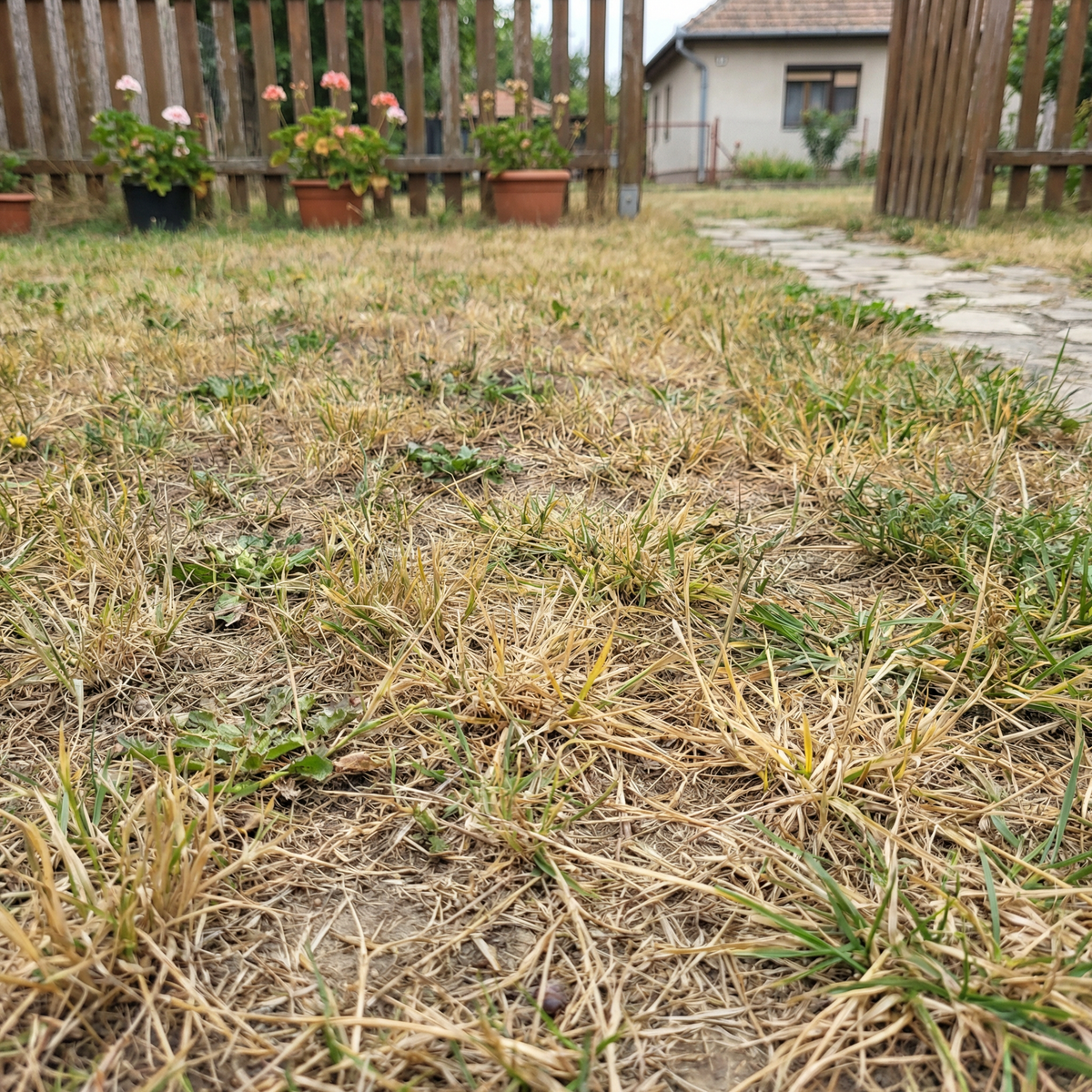
35 degrees, no rain for weeks, and the lawn is visibly suffering: fading, drying, turning straw-colored in patches. This is when most gardeners want to help – and that is exactly how they cause the most damage. In a prolonged heatwave the lawn doesn't want to grow, it wants to survive. Your job is not stimulation but protection.
What never to do in the heat: fertilizing
The most common summer lawn mistake is fertilizing during a heatwave. During multi-day spells above 33–35 °C, do not fertilize the lawn with anything – neither granular lawn fertilizer nor concentrated nutrient solution. A plant already shut down by heat stress cannot process the nutrients, and the rising salt concentration in the root zone causes scorching – your good intentions come back as burnt patches.
Wait for the weather to cool. If the heatwave has passed and you must feed, work with the lower dose on the label, early in the morning – this applies to every summer application.
Watering: infrequently, generously, at dawn
Short daily sprinkling is the worst strategy: the water only reaches the top few centimeters, the roots grow upward, and the lawn becomes even more sensitive to heat. Instead, water 2–3 times a week, generously each time (15–20 mm), and always at dawn or early morning. A significant part of afternoon water evaporates, and after evening watering the foliage stays wet all night – an open door for fungal diseases.
Mowing: higher, with a sharper blade, never in blazing sun
In the heat, raise the cutting height to 6–8 cm. Taller grass shades the soil, cools the root zone, and slows evaporation – whereas a short-cut lawn burns out within days. Work only with a sharp blade (a torn cut surface loses more water), and never mow in the midday heat – the combination of a fresh cut + blazing sun means instant stress.
Heat protection: survival is decided weeks earlier
How the lawn copes with a heatwave is actually decided in the weeks before it: deep-reaching roots and potassium-reinforced cell walls provide the stress tolerance. It is for this preparation and regeneration period that we put together the Drought Shield summer heat protection pack – applied in the summer periods between heatwaves, at the lower dose, early in the morning, it strengthens the garden for the next hot days.
And if it's already yellow? Stay calm – it's probably just asleep
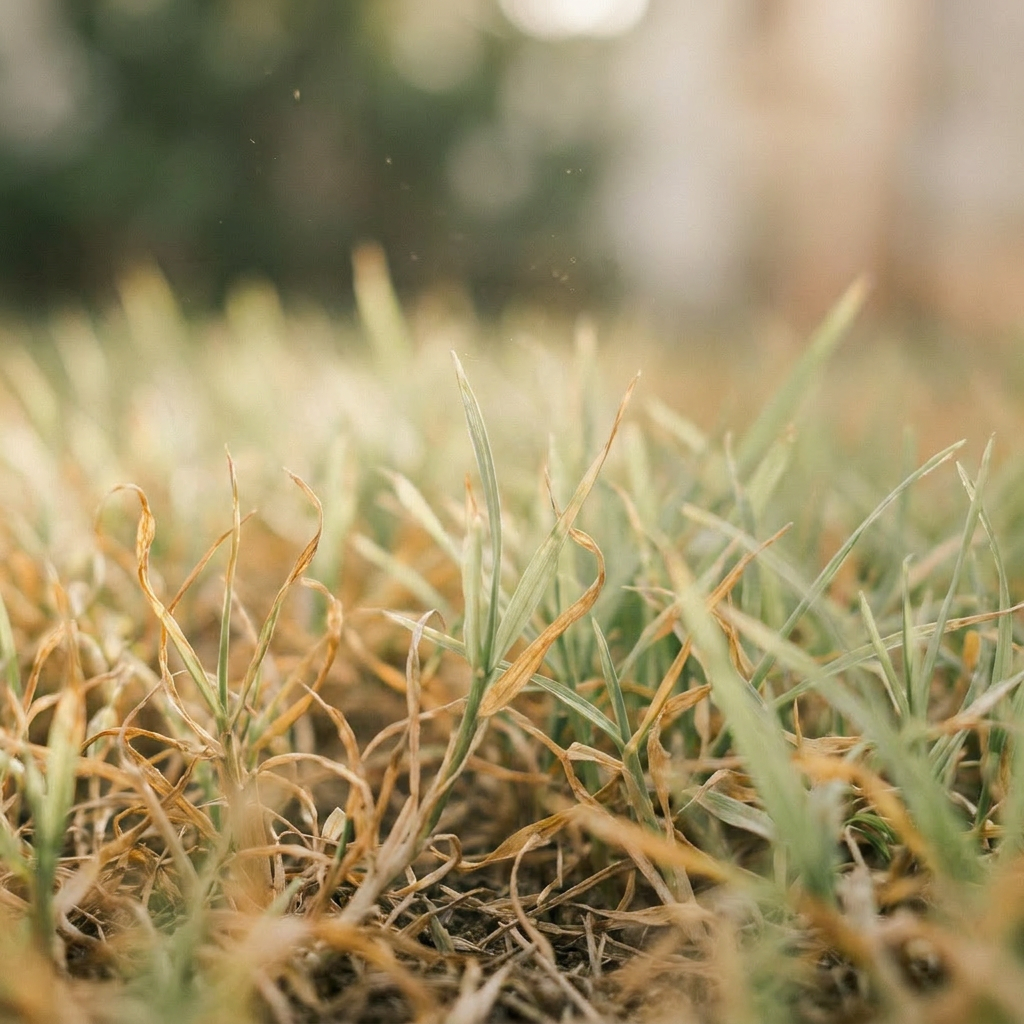
A lawn turning straw-colored is usually not dead but has entered heat dormancy: the grass halts growth and waits out the heat in its roots. Keep it alive with one moderate watering per week, and restart it once the heat has passed – if it hasn't revived after 2–3 weeks, it's time for systematic renovation: we described the 30-day recovery plan for a burnt-out lawn step by step here.
And for when and with what to feed your lawn during the rest of the season, see our lawn fertilization calendar.