Restoring a burnt-out lawn step by step – a 30-day plan
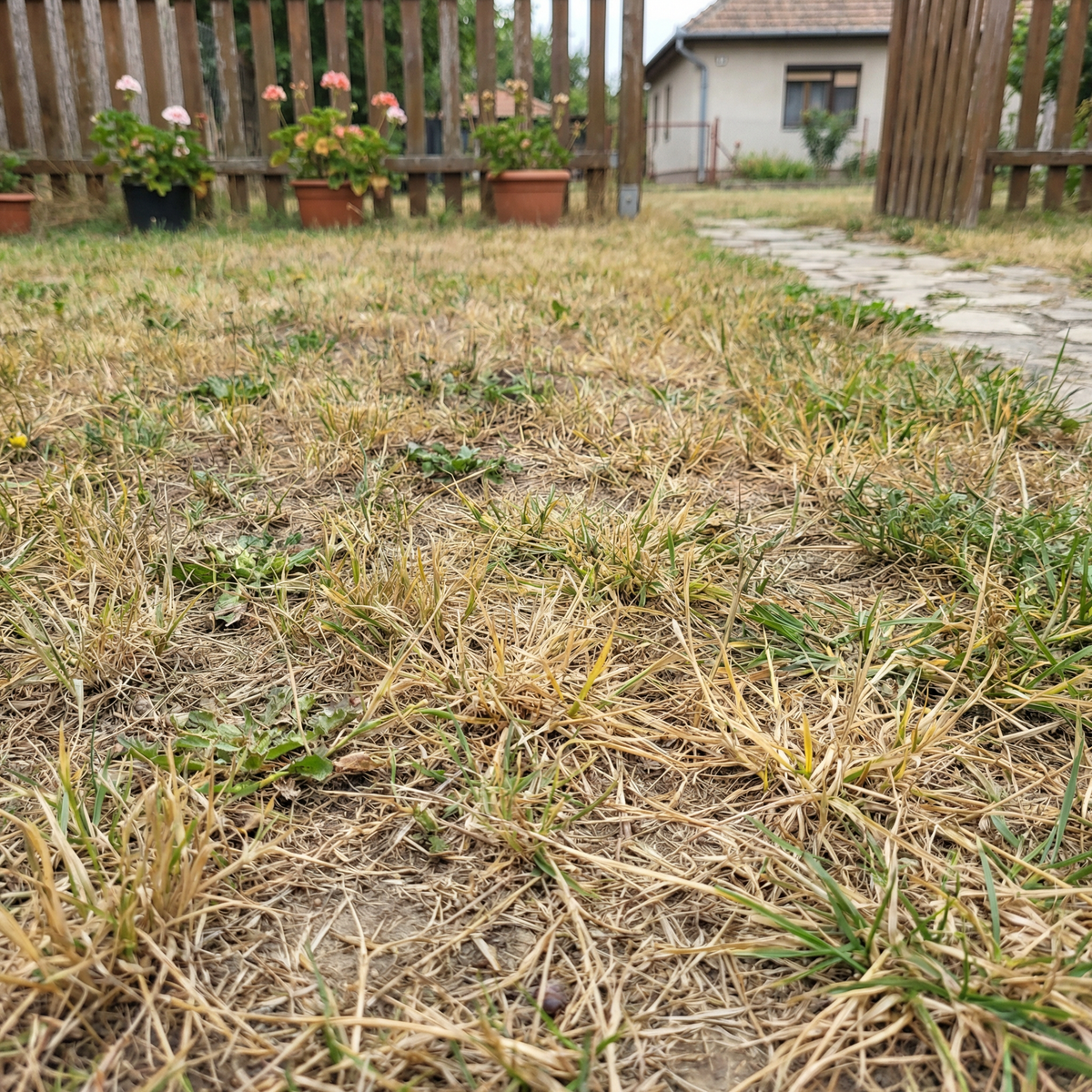
By midsummer the lawn is straw-yellow, patchy, lifeless – and the first thought is: the whole thing needs reseeding. Most of the time it doesn't. A large part of a burnt-out lawn can be saved if you work in the right order and with the right timing. This 30-day plan gives you exactly that.
First question: dormant or dead?
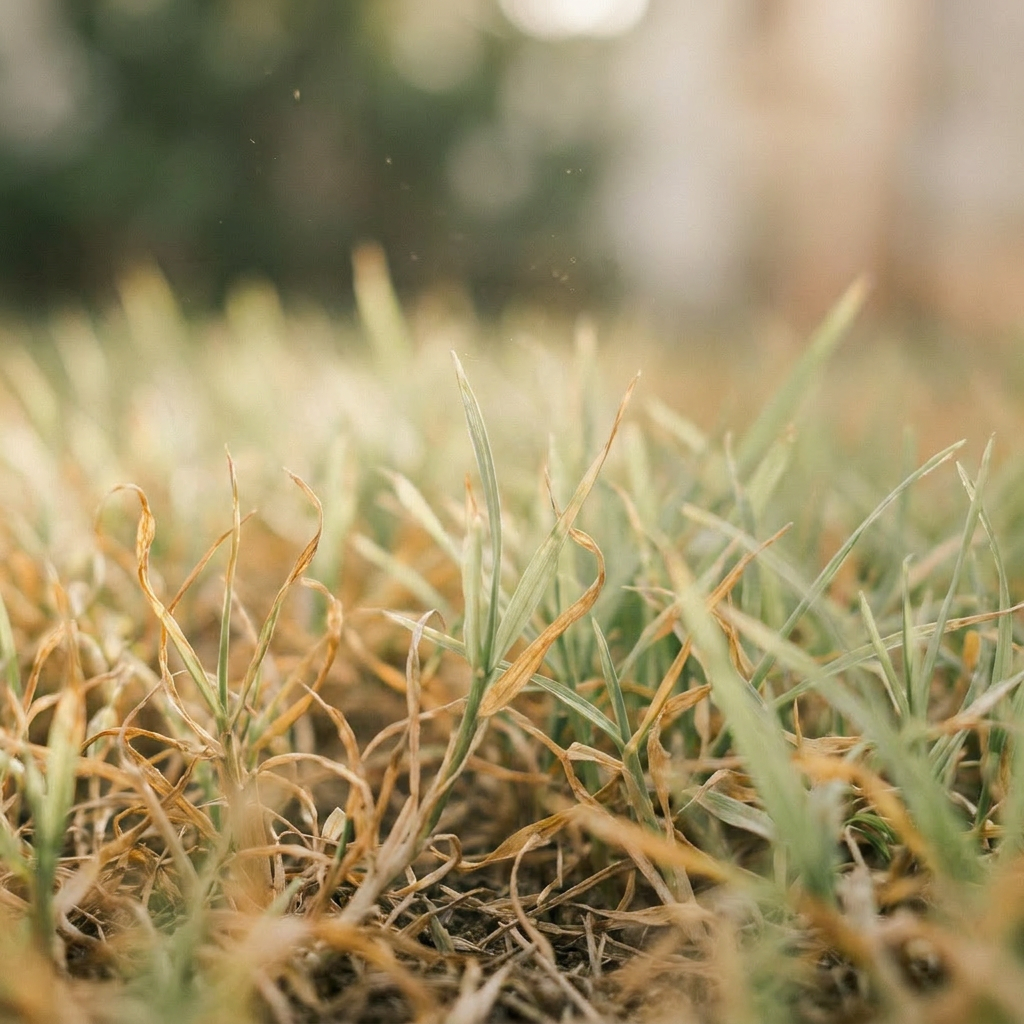
Dry, yellow grass can be one of two things: asleep in heat dormancy (the roots are alive, only growth has stopped) or truly dead. The test is simple: tug on a tuft. If it resists and is pale green-whitish at the base, it's alive. If it comes out in your hand with the roots, without resistance, then it really is gone. Another method: water a small patch regularly for a week – dormant grass will start to green up.
Most “burnt-out” lawns are actually asleep – and then renovation means restarting, not reseeding.
When to start
The ideal window for regeneration opens once the heatwave has passed – typically late August, early September, when the soil is still warm but heat stress is no longer working against the lawn. Don't start an intensive program during a prolonged heat spell: until then, the task is survival mode – we described how to protect the lawn in a heatwave here.
The 30-day plan, week by week
Week 1 – groundwork. Rake out the dead thatch layer so water and air can reach the soil. Set up a regular watering rhythm (2–3× a week, generously, at dawn). Start putting the soil in order: pH correction and calcium-magnesium replenishment make the bound nutrients available.
Week 2 – starting the nutrients. Once the lawn is visibly responding to watering, the lawn fertilizer can follow – in a moderate dose, watered in thoroughly.
Weeks 3–4 – reinforcement and patch repair. Lawn nutrient solution, absorbed through both leaves and roots, speeds up re-greening on a weekly rhythm. Now is the time to overseed the patches that actually died – in warm soil, grass seed germinates in 1–2 weeks.
If you don't want to pick the components yourself: the 30-Day Lawn Rescue Program contains exactly this four-step regimen in one – soil correction, lawn fertilizer, and foliar feeding for approx. 100–150 m² of lawn, along with the order of use.
After day 30: so it doesn't burn out again
Real protection against summer burnout depends on the autumn work: potassium-heavy autumn lawn fertilizer strengthens cell walls and roots – next summer's stress tolerance is decided there. For what to use season by season, see our summary in the lawn fertilization calendar.