
Lawn fertilization calendar: when, with what, and how much – season by season
Most lawn disappointments don't come from the owner doing nothing – they come from doing the right thing at the wrong time. Lawn fertilization is not a single event but a rhythm: the turf asks for something different in every season. Here is the calendar worth following.
Early spring (March–April): wake-up
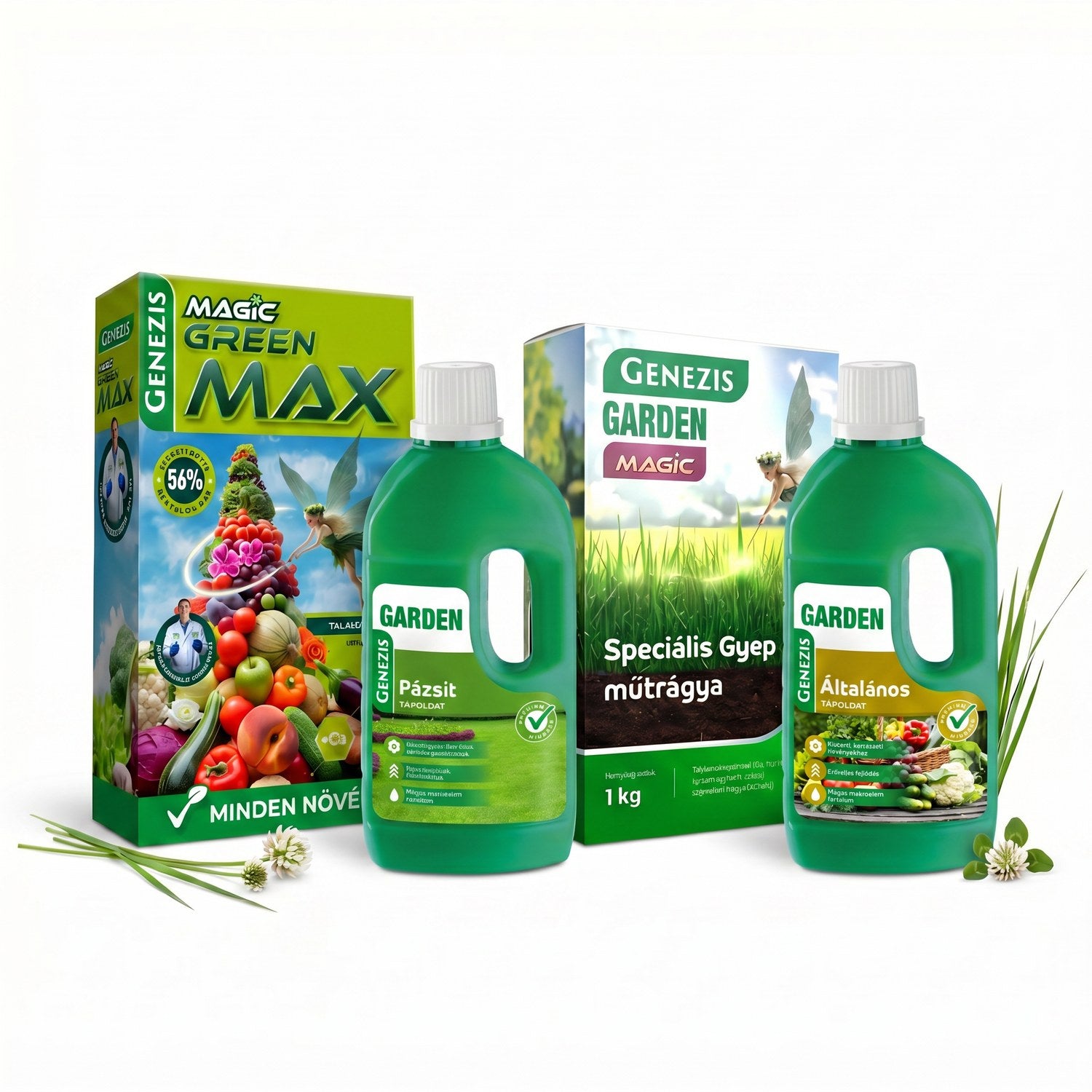
After winter the soil is cold and microbial life starts slowly – that's why the grass is yellowish and weak even if there are nutrients in the soil. So the first step is not nitrogen but putting the soil in order: pH correction and calcium-magnesium replenishment (Magic Green Max) so that the bound reserves become available. We explained in detail why spring yellowing starts in the soil here. Once the grass visibly starts growing and needs mowing, the first dose of lawn fertilizer can follow.
Late spring (May–early June): the main round
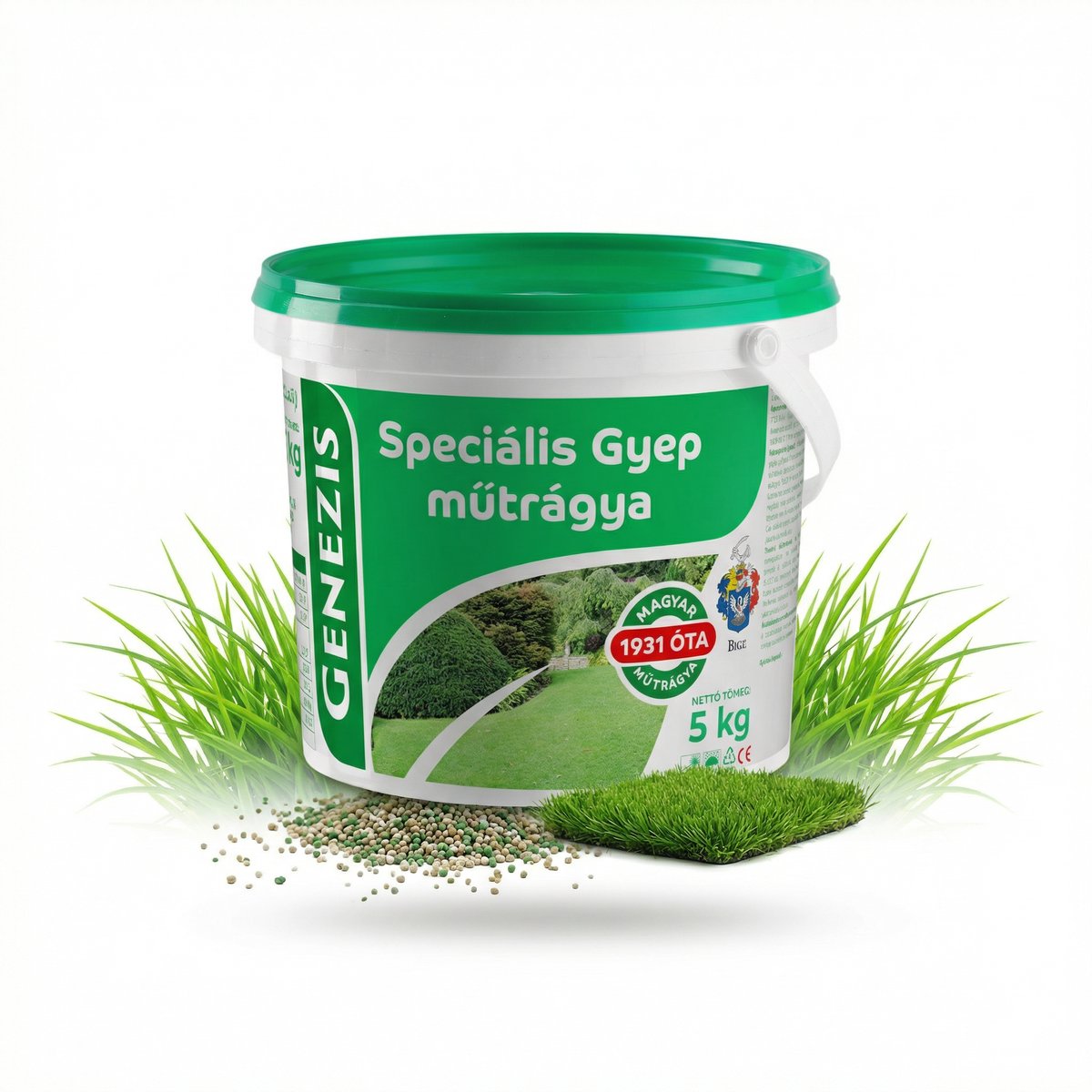
This is the lawn's main growth period – density and wear resistance are built now. A lawn fertilizer combining slow- and fast-acting nitrogen (Genezis Special Lawn Fertilizer or Garden Special Lawn Fertilizer) gives even development without sudden surges. After spreading, always water in thoroughly – that's the only way the granules reach the root zone.
Summer (June–August): careful mode
In summer the rule is simple: allowed in moderate weather, forbidden in a heatwave. During prolonged heat, no lawn fertilization of any kind – you'll find the details and the summer survival rules in our heatwave article. In the milder periods between heatwaves, Lawn nutrient solution, which is also absorbed through the leaves, is the tool for quick correction: at the lower dose, applied early in the morning.
Autumn (September–November): the most important round
If you fertilize only once a year, make it this one. The potassium-heavy Genezis Special Autumn Lawn Fertilizer strengthens cell walls, deepens the roots, and fills up the reserves – this determines how the lawn overwinters, how strongly it starts in spring, and how well it will cope with next summer's heat. Apply it from September to the end of October.
Winter (December–February): rest
Never spread anything on frozen or snow-covered turf – the nutrients are not used, and they leach away with the thaw. Winter is the time for tool maintenance and planning the next season.
How much? Less, more often
For every product, the label's dosing is the guide – and when in doubt, always the lower value. Overdosed nitrogen gives fast but weak-tissued growth and burdens the soil as well. If you want to cover the whole season in one system, the Lawn Signature Kit contains it all in one – from the mineral base through NPK to the foliar spray.

Leave a comment
This site is protected by hCaptcha and the hCaptcha Privacy Policy and Terms of Service apply.