What is soil life and why does it determine the condition of your garden?
When you look at your garden, you see the plants: the leaves, the flowers, the fruit. But what truly determines the condition of your garden stays hidden from view – it happens in the soil. Soil life is the invisible system that decides whether your plants will be healthy or not.
Soil is not merely a medium
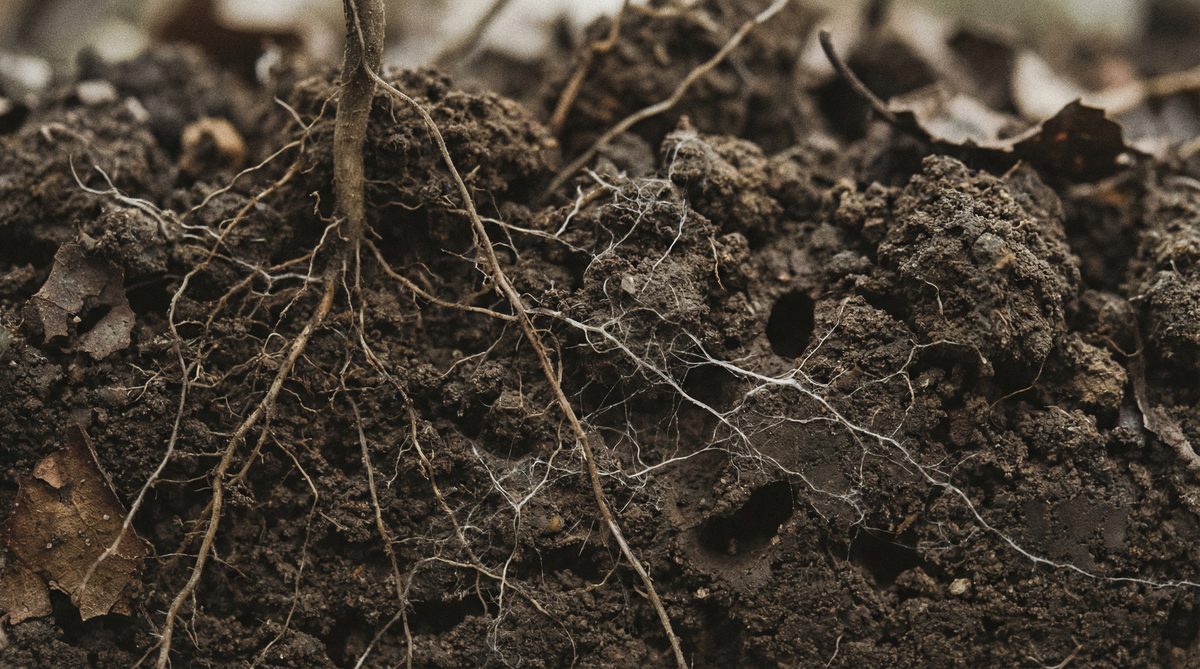
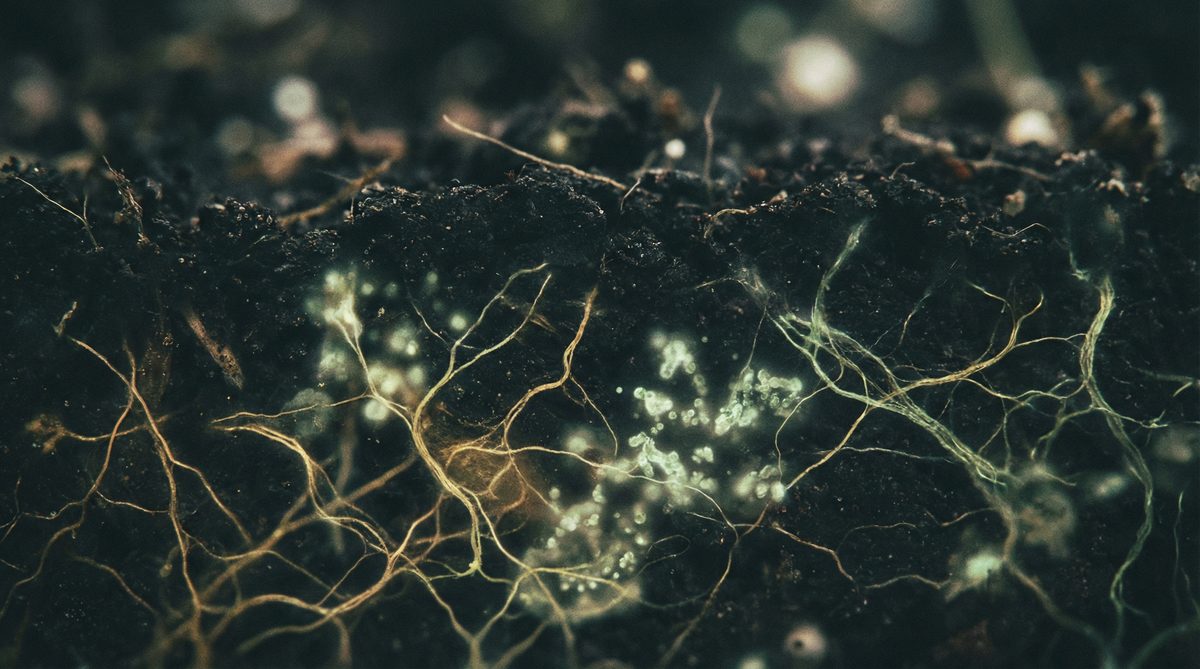
Many people think of soil as a neutral substance you plant things into. But the reality is far more complex. A single gram of healthy soil is home to billions of microorganisms: bacteria, fungi, protozoa, nematodes. These tiny organisms form the network that breaks down organic matter, transforms nutrients, and makes them available to plants.
Think of it as a digestive system. Just as the gut flora in the human body breaks down food and makes nutrients absorbable, the microorganisms in the soil do the same job for plants.
When the system slows down
If soil life weakens – whether because of poor pH, compaction, chemical overload or simply the winter cold – the consequences show up on the plants immediately. Yellowing, slow growth, weak flowering, susceptibility to disease. Not because there are no nutrients in the soil, but because the system that would process them isn't working.
The condition of a plant is always a mirror of the condition of the soil. If the leaves are speaking, the answer lies beneath the roots.
How can you support soil life?
The first step is to check and adjust the pH of the soil. Most soil-dwelling microorganisms are most active in the neutral to slightly alkaline range (pH 6.0–7.2). If the soil is acidic, Kalcinol helps restore the balance with natural calcium.
The second step is providing organic matter and the right nutrients. Microorganisms need to eat too – they require a carbon source, nitrogen and trace elements. Regular liquid feeding not only nourishes the plant, but sustains soil life as well.
So soil life is not some abstract scientific concept – it's the engine of your garden. If it works, everything works. If it doesn't, no surface treatment can make up for it.