Microorganisms in the soil – what do they do and why are they important?
When someone says the soil is alive, they are not speaking in poetic exaggeration. A single handful of healthy garden soil contains more microorganisms than there are people on Earth. These tiny creatures – bacteria, fungi, actinomycetes – do the work without which no plant could grow.
What do microorganisms do?
Soil microorganisms perform three fundamental tasks. First, they break down: they turn fallen leaves, dead roots and organic residues into tiny molecules. Second, they transform: they convert nitrogen, phosphorus and other elements into a form that plant roots are able to take up. Third, they connect: mycorrhizal fungi, for example, physically link the roots to nutrient sources, even over distances of a metre or more.
This triple function – breaking down, transforming, connecting – is what makes soil a living system. Without them, soil would be nothing but mineral dust in which nutrients would sit waiting in a locked-up, unavailable form.
Why do they matter in your garden?
When you add liquid feed or fertiliser to the soil, it doesn't go straight into the plant. It is the microorganisms that process, transform and serve up the nutrients to the roots. If this processing system isn't working, even the highest-quality plant food won't deliver the expected results.
That is exactly why it's not enough to feed the plant – you need to feed the soil as well. More precisely, the microorganisms living in it. When they are active, the cycle works: the soil provides the nutrients, the plant gives back organic matter, and the cycle continues.
How to keep the soil microbiology active
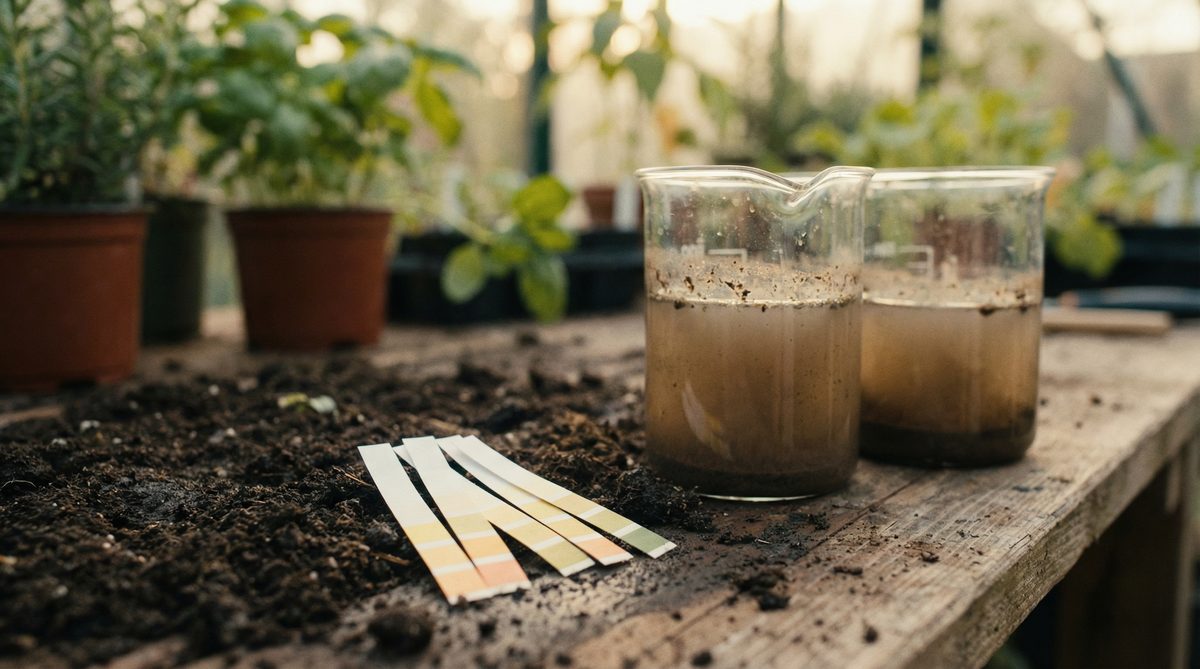
The three most important factors: pH, oxygen and nutrients. In acidic soil, most beneficial bacteria and fungi cannot function – which is why adjusting the pH is the foundation. Compacted soil lacks oxygen, so loosening and maintaining a good structure is equally crucial. Finally, regular, balanced nutrient replenishment ensures that the microorganisms have fuel too.
Soil is not alive because of what is in it – but because of what works in it. And that is the difference between a good garden and a struggling one.