Optimal Soil pH – Why Is It Key to Plant Development?
pH is not just a number on a soil test report. It is the single value that determines whether your plants can access nutrients, or whether everything is there in the soil – and they still can't take it up. If every gardener could measure just one thing in their soil, it should be the pH.
What does pH mean in practice?
The pH scale runs from 0 to 14: a value of 7 is neutral, below that is acidic, above it alkaline. Most garden plants are happiest in the 6.0–7.0 range. But why does it matter so much?
The answer lies in chemistry. The nutrients in the soil – nitrogen, phosphorus, potassium, iron, magnesium – dissolve to different degrees at different pH values. In the ideal range, most elements are readily soluble and available for uptake. But if the pH shifts – especially towards the acidic end – some elements become locked up, while others are released in excessive amounts, which can be toxic.
The problem with acidic soil
In Hungary, acidic soil is extremely common, especially in the western and northern regions of the country. In acidic soil, aluminium and manganese can rise to toxic levels, while phosphorus and molybdenum become almost completely unavailable. Plant roots are damaged, growth slows down, and the leaves show characteristic yellowing and discolouration.
What's more, acidic soil also has a negative effect on microorganisms. Most beneficial bacteria cannot function below pH 5.5, which means the nutrient cycle grinds to a halt as well. A double trap: the nutrients are locked up, and the system that would release them is paralysed too.
How to adjust the pH
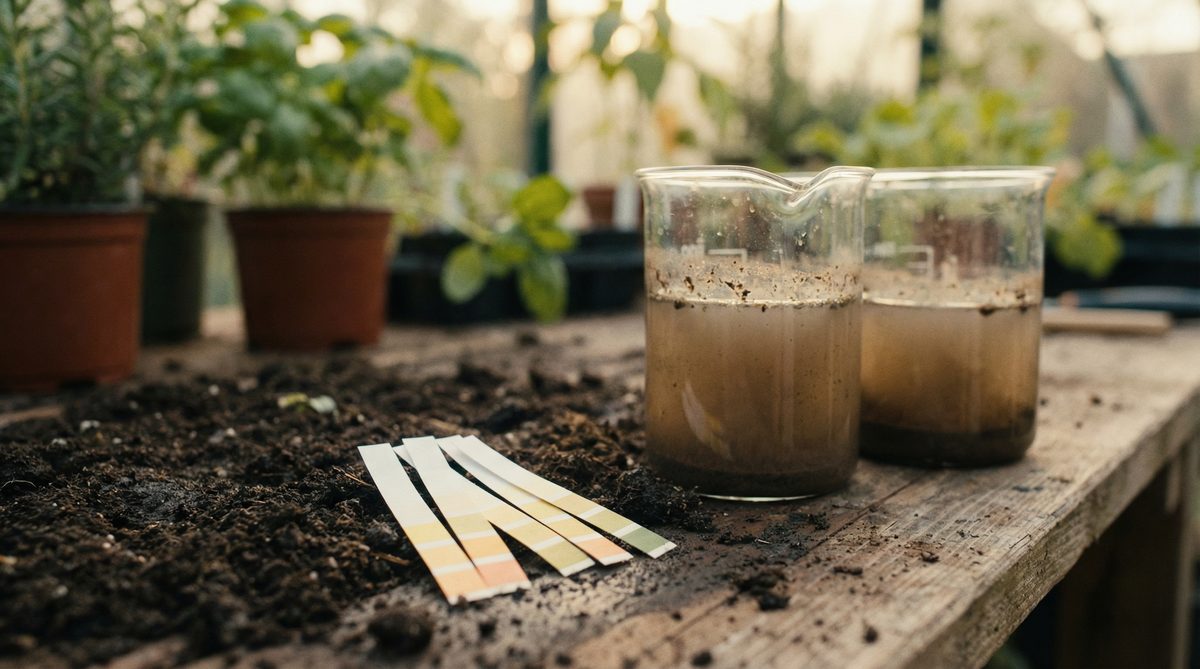
Adjusting pH is not complicated, but it does require awareness. The first step is measuring – this can be done at home with a simple pH tester. If the value is below 6.0, you need a calcium-containing product. Kalcinol is a natural source of calcium that raises the pH gradually, without disturbing the soil structure or the microbial balance. If magnesium replenishment is needed alongside the calcium – the two elements are more effective together – the dolomite-based Magic Green Max delivers both at once.
Restoring pH is not a one-off intervention – it needs to be checked periodically and corrected when necessary. But once you understand how much this number determines the performance of your garden, you will never ignore it again.
The right pH doesn't fix things – it makes things possible. It opens the way for the nutrients, the microbiology and, ultimately, the plants.