
Soil structure and water management – why is the root zone key?
When a plant in your garden isn't doing well, the instinctive reaction is to add nutrients. But what if the problem isn't the nutrients, but the physical structure of the soil? Soil structure and water management determine how the roots develop, how they access air and water – and, ultimately, nutrients.
What is good soil structure?
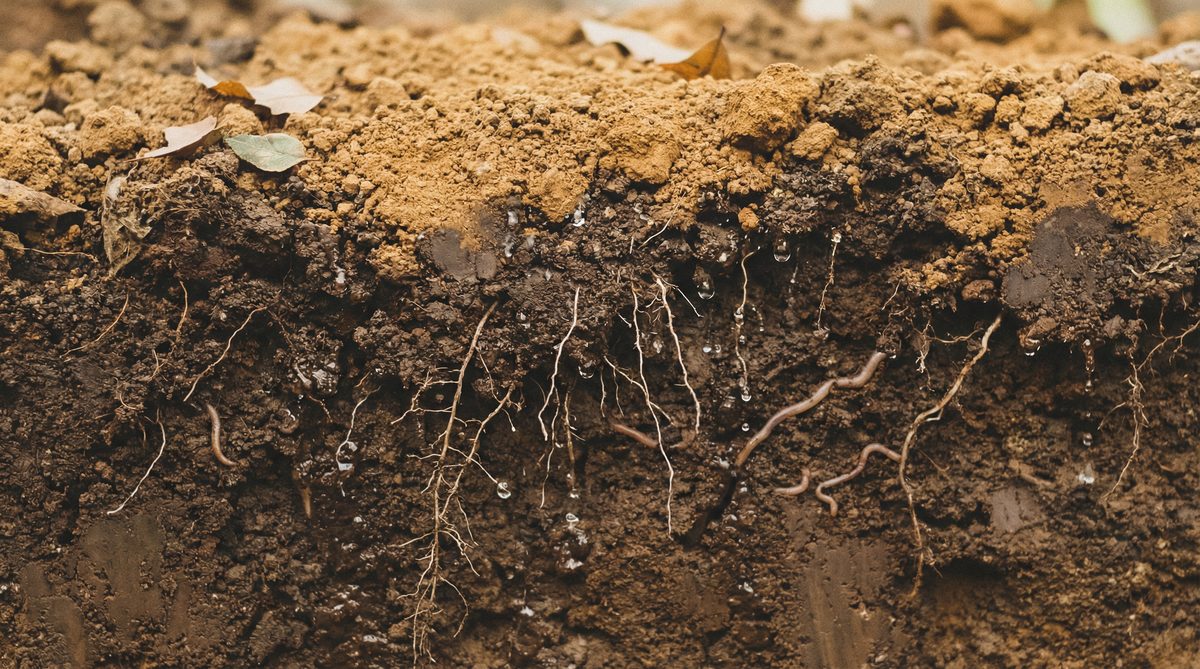
The ideal soil is crumbly, airy and free-draining. Tiny soil particles are loosely bound to one another, with pores between them that allow air and water to flow. This structure guarantees three things at once: the roots can grow easily, excess water drains away, and the moisture that's needed stays in the pores.
Poorly structured soil – whether too compact or too loose – fails to provide at least one of these. Compacted clay soil won't let water through, sandy soil won't hold it. In both cases, the root zone suffers.
The link between water management and the root zone
The root zone is the layer of a few tens of centimetres where the plant's active roots are found. Everything is decided in this zone: water and nutrient uptake, oxygen supply, microbial activity. If the soil here is compacted and waterlogged, the roots suffocate. If it is too loose and dry, they dry out.
Good water management means that after rain or watering, the water soaks in quickly, the excess drains away, but the soil still holds moisture in its micropores for days. This balance ensures that the plant is never too dry and never too wet.
How to improve soil structure
Calcium plays a key role here too. Calcium ions help the soil particles to aggregate – that is, to come together into stable crumbs. This is especially important with clay soils, where a lack of calcium leads to compaction and the formation of an impermeable layer.
Regular use of Kalcinol improves not only the pH but the soil structure as well: a crumblier structure results in better drainage, more air and stronger root development. Organic matter – compost, mulch – also contributes significantly to a stable soil structure.
The quality of the root zone determines the future of the plant. If the structure, water and air are in order there, everything else – nutrients, growth, harvest – follows naturally.