Thuja turning brown? Here's how to tell if it's nutrient deficiency, drought, or fungus
The thuja and other evergreens are the backbone of the garden – visible all year round, so any discoloration immediately catches the eye. Browning, however, is not a single disease but a symptom – and its LOCATION tells you almost exactly what is happening. Let's go through what it means when it browns on the inside, at the shoot tips, or in patches.
Browning inside, near the trunk – natural and harmless
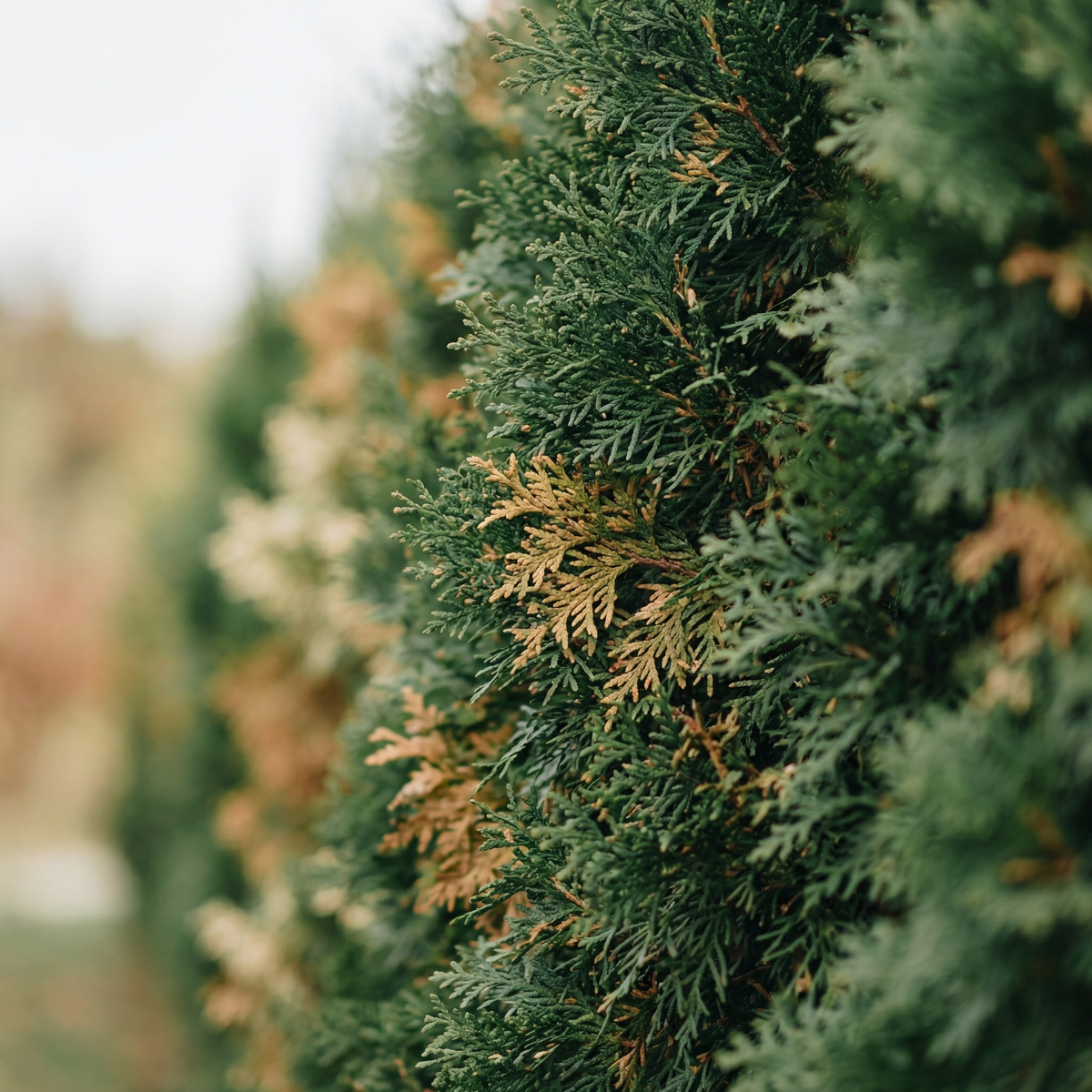
If the browning appears inside the plant, on the old, shaded parts – especially in autumn – that's the thuja's normal foliage turnover: the inner scale leaves that no longer receive light die off. What to do: comb them out at most, no panic. But if the OUTER green surface is browning, read on.
Shoot tips browning – water or nutrients
The two most common causes of browning moving inward from the tips are lack of water (or standing water!) and nutrient – mainly magnesium – deficiency. With freshly planted thujas, watering is almost always the bottleneck in the first two years: the root system is still small, so they need 1–2 thorough waterings per week (10–20 liters per plant), especially in the heat.
If watering is fine but the foliage is pale with a yellowish-brownish tint, nutrition is what's missing: Garden Evergreen nutrient solution was made specifically for thujas and evergreens – applied every two weeks from April to August, it stops the fading and brings back the deep, rich green color. On acidic, exhausted soil, mineral correction of the root zone (calcium-magnesium) also gives a big lift – we covered the topic in our soil pH article.
Browning in scattered patches, foliage dropping – fungus or pest
If the browning appears in irregular patches, tiny black dots (spore bodies) are visible on the shoots, or the scale leaves are shedding en masse, then a pathogen (e.g. thuja shoot blight) or a pest (leaf miner) is at work. In that case, cut out and burn the infected parts or put them in general waste (NOT the compost), disinfect your pruning shears, and a fungicide treatment may also be needed – ask a plant protection specialist shop for advice. The good news: a strong, well-fed evergreen is much more resistant – prevention starts with nutrition here too.
Quick decision map
Browning inside → natural. At the tips, evenly → watering + feeding. In patches, with black dots → pathogen, pruning + treatment. When in doubt, send a photo to our free garden diagnosis – we'll help identify it.